1. What is Day 1 CPT?
2. Is Day 1 CPT legal?
3. Why is CPT Important to International Students?
4. Who Will Benefit from Day 1 CPT?
5. Day 1 CPT Criteria and Requirements
6. The Risks of Using Day 1 CPT
7. How to Choose Day 1 CPT Universities
8. How to Choose Day 1 CPT Programs Day 1 CPT Application Process
9. Other Day 1 CPT FAQ
What Is Day 1 CPT? Is it legal?
The Risk of Using Day 1 CPT
The Importance of CPT for International Students
Choosing the Right Day 1 CPT University
Who will benefit from Day 1 CPT?
Day 1 CPT Application Step by Step
Day 1 CPT Eligibility
Other Day 1 CPT FAQ
1. What Is Day 1 CPT? Is Day 1 CPT Legal?
Is Day 1 CPT Legal? It Can Be, If CPT Requirements Are Met
Day 1 CPT is an informal term, not a separate visa or immigration category. It generally refers to Curricular Practical Training (CPT) authorized during a student's first academic term. CPT can be authorized during a graduate student's first academic term when the graduate program requires immediate participation in qualifying practical training and the student meets all applicable CPT requirements. The DSO must authorize the employment in SEVIS and issue a CPT-endorsed Form I-20 before the student begins work. Federal regulations at 8 CFR 214.2(f)(10)(i) specifically provide an exception to the one-academic-year requirement for graduate programs that require immediate participation in CPT. Day 1 CPT is not banned or ending: in November 2026, a federal court blocked SEVP’s August 2026 guidance that had narrowed CPT eligibility (see below).
F-1 students may gain practical training experience in the United States primarily through Curricular Practical Training (CPT) and Optional Practical Training (OPT). Both can authorize training related to a student's major area of study, but they have different eligibility requirements, purposes, and authorization processes. CPT is tied to the student's curriculum and is authorized by the school's DSO, while OPT is separately authorized by USCIS.
Federal regulations generally require an F-1 student to complete one full academic year of lawful full-time enrollment before becoming eligible for practical training. However, an exception applies to students enrolled in graduate programs that require immediate participation in CPT. Having previously completed a U.S. degree does not, by itself, create an exception to the one-academic-year requirement.
CPT is governed by federal F-1 regulations and ICE's Student and Exchange Visitor Program (SEVP) guidance. The DSO evaluates an individual student's CPT request and, when the requirements are satisfied, records the authorization in SEVIS and issues an updated Form I-20. The training must be directly related to the student's major area of study and meet the applicable curricular requirements.
For students considering a program that offers CPT during the first academic term, it is important to verify that the school is SEVP-certified, appropriately accredited, and that the program's practical-training requirement genuinely complies with federal CPT requirements. Accreditation or enrollment alone does not establish CPT eligibility.
2026 CPT Guidance and the November 17 Court Order
In August 2026, SEVP sent schools two broadcast messages: Broadcast Message 2608-01 (August 12) and Broadcast Message 2608-02 (August 24). Read the second one here: SEVP Broadcast Message 2608-02 (ICE PDF). The messages said CPT should be authorized only when practical training is required of every student in the program. They treated training tied to an elective course as not qualifying. The regulation itself, 8 CFR 214.2(f)(10), did not change.
The court ruling. On October 5, 2026, four higher-education groups sued to challenge both messages (Association of American Universities v. U.S. Department of Homeland Security, No. 1:26-cv-14520, D. Mass.). On November 17, 2026, the court stayed both broadcast messages and barred the government from enforcing the new CPT interpretation while the case continues. The ruling is temporary, and the government may appeal.
What this means for you:
- The ruling does not authorize anyone to work. You still need a CPT-endorsed Form I-20 from your DSO before you start.
- Schools decide how quickly to respond, and some may keep stricter policies for now. Ask your DSO, in writing, what your school’s current CPT policy is.
- Programs that require practical training of every student are the safest choice if the rules tighten again.
Full coverage: Federal Judge Blocks ICE’s New Restrictions on F-1 CPT.
2. Why is CPT important to international students?
3. Who Will Benefit From Day 1 CPT?
Day 1 CPT is a good choice for you if you are:
- International students whose career goals fit a program that builds practical training into the curriculum;
- F-2 dependents who want to pursue full-time postsecondary study and potentially become eligible for F-1 practical training may consider changing to F-1 status. F-2 status itself does not authorize employment.
- Currently working in your home country and trying to get a boost for your career but don’t want to just study in a classroom. Day 1 CPT programs allow you to enjoy American education as well as get real-life work experience in the U.S., which makes you more employable in both the U.S. and your home country after graduation.
- H1B holders who were laid off. You may have a grace period of up to 60 days to take your next step, and changing to F-1 status is one option to discuss with an immigration attorney.
- H4 holders without work authorization. H-4 status allows you to study, but CPT is available only in F-1 status, so you would first need to change to F-1.
- F-1 students who have fallen out of status may, in some circumstances, be eligible to request reinstatement. USCIS—not the university—decides reinstatement applications. Requirements include generally filing within five months unless exceptional circumstances justify the delay, having no record of repeated or willful violations, pursuing or intending to pursue a full course of study, and not having engaged in unauthorized employment.
-
People changing status to F-1, for example from B-1/B-2 to F-1 or from J-1 to F-1. Day 1 CPT programs often have several start dates a year, which can make timing easier. Check your eligibility first: B-1/B-2 visitors may not start classes until the change is approved, and some J-1 holders are subject to a two-year home residency requirement.
4. Day 1 CPT Eligibility
- Valid F-1 status. Your F-1 status (shown by your Form I-20 and I-94) is what matters, not just your F-1 visa.
- A graduate program that requires immediate practical training. This is what allows CPT in your first term.
- A qualifying job offer directly related to your major.
- DSO authorization first. You may start only on or after the start date shown on your CPT I-20.
- Good academic standing. Your school sets the minimum GPA and attendance rules, and many require a 3.0 GPA for graduate students.
- Working hours:
- Part-time CPT: 20 hours per week or less
- Full-time CPT: more than 20 hours per week
- 12 months or more of full-time CPT in total makes you ineligible for OPT.
- Timely renewal. Renew your CPT each term according to your school’s rules.
5. The Risk of Using Day 1 CPT
- Raise questions regarding your status and your right to work
Using Day 1 CPT does not automatically make an applicant ineligible for H-1B status. However, H-1B cases may face additional scrutiny when there are questions about whether the student properly maintained F-1 status, followed CPT authorization requirements, or participated in a legitimate academic program. To reduce potential issues, students should carefully follow their university’s CPT policies and ensure that all employment is properly authorized and directly related to their field of study. ICE confirms that CPT must be authorized by the school’s DSO before employment begins and must be integral to the student’s academic program. (ICE: Practical Training)
Choose an established, SEVP-certified school with a clear written CPT policy. Good schools guide students through the CPT process and can supply records such as enrollment verification, attendance confirmation, and CPT authorizations if USCIS later issues a Request for Evidence (RFE). See our Day 1 CPT RFE guide.
-
F-1 Visa Renewal and Re-entry Considerations
CPT is lawful only when the student, curriculum, training arrangement, and DSO authorization satisfy the applicable requirements. Enrollment in a program described as ‘Day 1 CPT’ does not by itself establish compliance.
Students should work only for the authorized employer, during the authorized dates, and under the conditions shown on their CPT authorization. Unauthorized employment or other status violations may affect future immigration benefits, visa applications, or admission decisions.
Visa issuance, admission, and future immigration adjudications are case-specific. Students with questions about their circumstances should consult their DSO and, where appropriate, qualified immigration counsel.
For a full breakdown, read Day 1 CPT Risks in 2026: H-1B, OPT, Travel & Compliance.
Choose schools with a long track record and accreditation from an institutional accreditor recognized by the U.S. Department of Education. Since July 2020, the Department no longer classifies accreditors as “regional” or “national.” Instead, it recognizes institutional accreditors, all held to the same federal standards. Many established Day 1 CPT schools are accredited by agencies such as the WASC Senior College and University Commission (WSCUC) or the New England Commission of Higher Education (NECHE).
Verify any school yourself in two places: the Department of Education’s accreditation database (DAPIP), and the SEVP school search on Study in the States, which confirms the school can enroll F-1 students.
F-1 regulations limit online study: no more than one class or three credits per term taken fully online can count toward your full course of study. That is why Day 1 CPT programs require regular on-site attendance. Before you enroll, find out how often you must be on campus. Every F-1 student must meet those requirements, including students on CPT.
On-site requirements vary widely, from weekly classes to a few in-person sessions per term. Schools change these schedules, so confirm the current requirement in writing with each school before you apply. You can also check our schools by on-site requirement page.
Keep records of your attendance and travel to campus, such as flight or train tickets, hotel or parking receipts, and textbook and tuition receipts. USCIS may ask for this evidence after you are selected for H-1B.
Therefore, keep your records of the onsite attendance in case the USCIS requests evidence to prove that you have attended classes as required to maintain your legal status.
Accredited schools must deliver their programs in the format they have reported to their accreditor and to SEVP. A school that does not deliver the in-person instruction it promises puts its students at risk. Choose schools that enforce their attendance rules.
When you choose CPT schools, please also consider the location. Is the location easily accessible?
Because you must attend on-site sessions for the length of your program, choose a campus you can reach reliably by flight, car, bus, or train.
ICE data: Top 200 Employers for CPT Students, 2003–2019 (PDF)
Top 4 Day 1 CPT Universities:
If you have no idea where to start, use our screening tool to weigh your options. Still confused? Contact us for a free consultation.
Top 4 Day 1 CPT Universities for DBA:
Bottom Line: Make a Reasonable Study Plan
Officers reviewing your visa and immigration applications look at your whole academic history. Several similar degrees in a row can draw extra questions.
- Show progression. A logical path, such as bachelor’s to master’s to doctorate, is easier to explain than repeating the same level.
- Connect study and career. Your program should fit your work experience and career goals.
- Choose a program for its academic value, not only for work authorization. If you are considering a DBA or another doctoral program, confirm whether it is designated as STEM before relying on a STEM OPT extension.
If you have no idea where to start, use our screening tool to weigh your options. Still confused? Contact us for a free consultation.
Read more: Day 1 CPT Application Process
Usually, after you received an offer letter from your Day 1 CPT universities, you can start to apply for internship authorizations. CPT application usually involves the following steps:
Step 1: Get a Job Offer
Get an offer from your job, and make sure the job description is aligned with your Day 1 CPT program!
Step 2: Register for a CPT course
At most Day 1 CPT universities, in order to enjoy your CPT, you will have to register for a CPT course first. Then, hand in your offer letter, and a CPT agreement signed by your employer along with other supporting materials required by your university to apply for a new CPT I-20.
Step 3: CPT I-20
Wait for your CPT application to be approved by your CPT school and receive your new I-20. Note that you must wait until the CPT takes effect to work. If your employer requires you to start working right away, apply for an unpaid leave while waiting for your new CPT I-20 to avoid breaking the immigration law.
Step 4: Renew your CPT
Pay attention! Before the end of each semester, check your email, even spam! Your school will send the CPT renewal email/reminder to you. If you don’t receive the renewal email, remember to contact your advisor. Not renewing your CPT on time may result in losing your working status.
If the current CPT authorization expires before a new authorization begins, you are not authorized to continue working after the CPT end date.
You can also check this GUIDE.
Under the currently operative Duration of Status framework, an eligible F-1 transfer student generally must begin classes at the transfer-in school by the next available session start date or within five months, whichever comes sooner. The exact calculation depends on the student's circumstances. A normal SEVIS school transfer does not automatically require the student to leave the United States and re-enter simply to ‘activate’ the new I-20.
Under the currently operative D/S framework, an F-1 student generally receives a 60-day grace period after completing a program of study or authorized post-completion practical training. During that period, the student may prepare to depart or, when eligible, take another permitted immigration or SEVIS action such as transferring schools. Transfer timing is also subject to the applicable five-month/next-available-session requirements. Students should coordinate the transfer with both schools' DSOs before the applicable deadlines.
Policy note: DHS published a rule that would end “duration of status” admission and shorten the F-1 grace period to 30 days. A federal court in Massachusetts postponed it on September 14, 2026, and vacated the entire rule on November 16, 2026. The government may appeal. For now, the existing D/S framework and the 60-day grace period still apply. If you travel, check your I-94 record after you return. Read more: Federal Court Vacates DHS Rule to End F-1 Duration of Status.
Yes! day1cpt.org partnered schools allow you to enroll even after the semester has started. There are up to 6 enrollment periods during the year.
Check each school’s calendar on our Day 1 CPT enrollment windows page.
There are two main routes.
1. Change of status inside the U.S. You file Form I-539 with USCIS, with your new Form I-20 and proof that you paid the SEVIS I-901 fee. You must keep your current status while the application is pending. If you are in B-1/B-2 status, do not enroll in or begin classes until USCIS approves the change. Processing can take months, so your start date may need to be deferred.
2. Consular processing abroad. You leave the U.S., apply for an F-1 visa, and re-enter as an F-1 student. The State Department now says applicants should apply in their country of nationality or residence. Applying in a third country can mean longer waits and may make it harder to qualify. If you already hold a valid F-1 visa, ask your DSO and an immigration attorney whether you can use it to re-enter with your new I-20.
Important: Not every status can change to F-1 inside the U.S. For example, some J-1 holders are subject to a two-year home residency requirement. Get advice on your specific case before you file. Learn more: B-1/B-2 to F-1, H-1B to F-1, H-4 to F-1, or contact us.
Generally, yes. Under the current D/S framework, F-1 students can transfer between SEVP-certified schools.
First, get admitted by the new school. Then ask your current DSO to set a SEVIS release date. The new school issues a transfer I-20, and you must start classes there within the time limits in the five-month rule above.
CPT does not move with you. Your current CPT authorization ends when your SEVIS record is released. You may work again only after the new school authorizes CPT and issues a new CPT I-20. Plan for a possible gap in employment.
Read more: How to transfer your SEVIS
Work Related
ICE has published lists of the top employers of F-1 students on CPT. These lists show where CPT students worked. They do not show whether an employer sponsors H-1B petitions for Day 1 CPT students. Each employer decides H-1B sponsorship on a case-by-case basis.
- Official data: ICE: 2003–2019 Top 200 Employers for CPT Students (PDF)
- Our list: Day 1 CPT employer list
Part-time vs. full-time CPT: CPT of 20 hours per week or less is part-time. More than 20 hours per week is full-time. Twelve months or more of full-time CPT makes you ineligible for OPT at the same degree level.
Yes, but only after your school authorizes the new employer. CPT is approved for a specific employer and specific dates. Reporting a change afterward is not enough.
- Get the new offer, and make sure the role is directly related to your program.
- Submit the new offer and any employer agreement your school requires to your DSO.
- Wait until the DSO updates SEVIS and issues a new CPT I-20 that lists the new employer.
- Start work only on or after the start date shown on that I-20.
Working for the new company before this authorization could count as unauthorized employment.
Each school sets its own CPT application deadlines. Many let admitted students apply before the term starts, once they are admitted (or their SEVIS transfer is complete) and they have a qualifying job offer.
Whatever the deadline, federal rules allow you to begin CPT only after you receive a Form I-20 with the DSO’s CPT endorsement, and not before the start date shown on it. Apply as early as your school allows, because late applications are a common cause of gaps in work authorization.
Often, yes, there is a gap, and you can’t work during it. OPT authorization ends automatically when your SEVIS record is transferred to another school. You can start working again only after the new school authorizes CPT and issues your CPT I-20, and not before the start date on that form.
How to keep the gap short:
- Apply to the new school early, and plan the SEVIS release date with both DSOs.
- Submit your CPT application as soon as the new school allows. Schools may take several business days to process transfers and CPT, especially near deadlines.
- If a gap occurs, take unpaid leave. Keep accurate records with your employer showing that you didn’t work during those days, in case USCIS asks for evidence later.
Read more: SEVIS transfer gap: planning work breaks from OPT to Day 1 CPT
Yes, as long as you keep maintaining F-1 status: full-time enrollment, normal academic progress, and properly authorized CPT. Your employer may register you again in a later H-1B season while you are still studying, but selection is never guaranteed.
Your F-1 program should follow a genuine academic plan, not an H-1B timeline. A school can extend your program end date only for compelling academic or medical reasons. Waiting for another lottery is not one of them. Annual vacation and break rules depend on your school’s calendar, so confirm them with your DSO.
Read more: H-1B wage levels and the weighted lottery
Usually not until your H-1B status begins. Being selected in the lottery does not change your status. Your employer must file the petition, and if it requests a change of status, H-1B status generally starts on October 1. Until then, you must keep your F-1 status by staying enrolled full time and meeting your program’s requirements.
If you withdraw early, you may lose F-1 status. USCIS could then deny the change of status, and you would have to leave the U.S. and apply for an H-1B visa abroad. Talk to your DSO and your employer’s immigration attorney before changing your enrollment.
No. The ruling blocks SEVP’s August 2026 guidance, but it does not authorize anyone to work. You may start only after your DSO authorizes CPT in SEVIS and issues a Form I-20 showing your employer and dates. If your school paused CPT, the school decides when and how to resume.
School Related
Yes! Day1cpt.org can help you waive the application fee. Contact us before you submit your application to check.
International travel is allowed, but plan carefully. To return as an F-1 student, you will generally need:
- A valid passport
- A valid F-1 visa
- A Form I-20 with a recent DSO travel signature
- Proof of enrollment
- Your CPT I-20 and employment documents
If your visa has expired: The State Department now advises applying in your country of nationality or residence. Allow extra time for appointments and possible administrative processing.
Officers may ask about your program and your CPT, so travel only with your DSO’s confirmation that your record is in order. After you return, check your I-94 record.
Read more: Denied entry because of Day 1 CPT? How to avoid the risks
Yes, if you are eligible. You can receive up to 12 months of OPT at each higher education level (bachelor’s, master’s, and doctoral). Graduates in qualifying STEM fields may apply for a 24-month STEM OPT extension, up to two times in a lifetime at different degree levels.
Watch your full-time CPT. If you use 12 months or more of full-time CPT (more than 20 hours per week) in total, you lose eligibility for post-completion OPT. Part-time CPT does not count toward that limit.
Read more: OPT and STEM OPT guide
Check these four things before you apply:
- SEVP certification. Search the school on Study in the States’ school search.
- Accreditation. Confirm it through the school’s accreditor and the U.S. Department of Education’s accreditation database.
- A written CPT policy. Ask how the school applies CPT after the November 17, 2026 court order. Programs where practical training is required of every student carry the least risk if the rules change again.
- On-site attendance requirements, tuition, and renewal rules. These vary widely between schools.
Compare schools side by side with our Day 1 CPT university comparison table.
Day 1 CPT Schools
West
Northeast
South
Midwest
You might want to know more about Day 1 CPT
Have Questions? Contact us now!
OPT Comprehensive Guide
- What is OPT?
- OPT Eligibility
- OPT Application Guide
- STEM OPT Application Guide
- How to Fill in i765 Form?
- OPT Grace Period
- OPT Denied & Solution
H1B Comprehensive Guide
- What is H1B?
- H1B Eligibility
- H1B Application Guide
- H1B Grace Period
- H1B Denied & Solution
News - Day 1 CPT & Day 1 CPT Universities
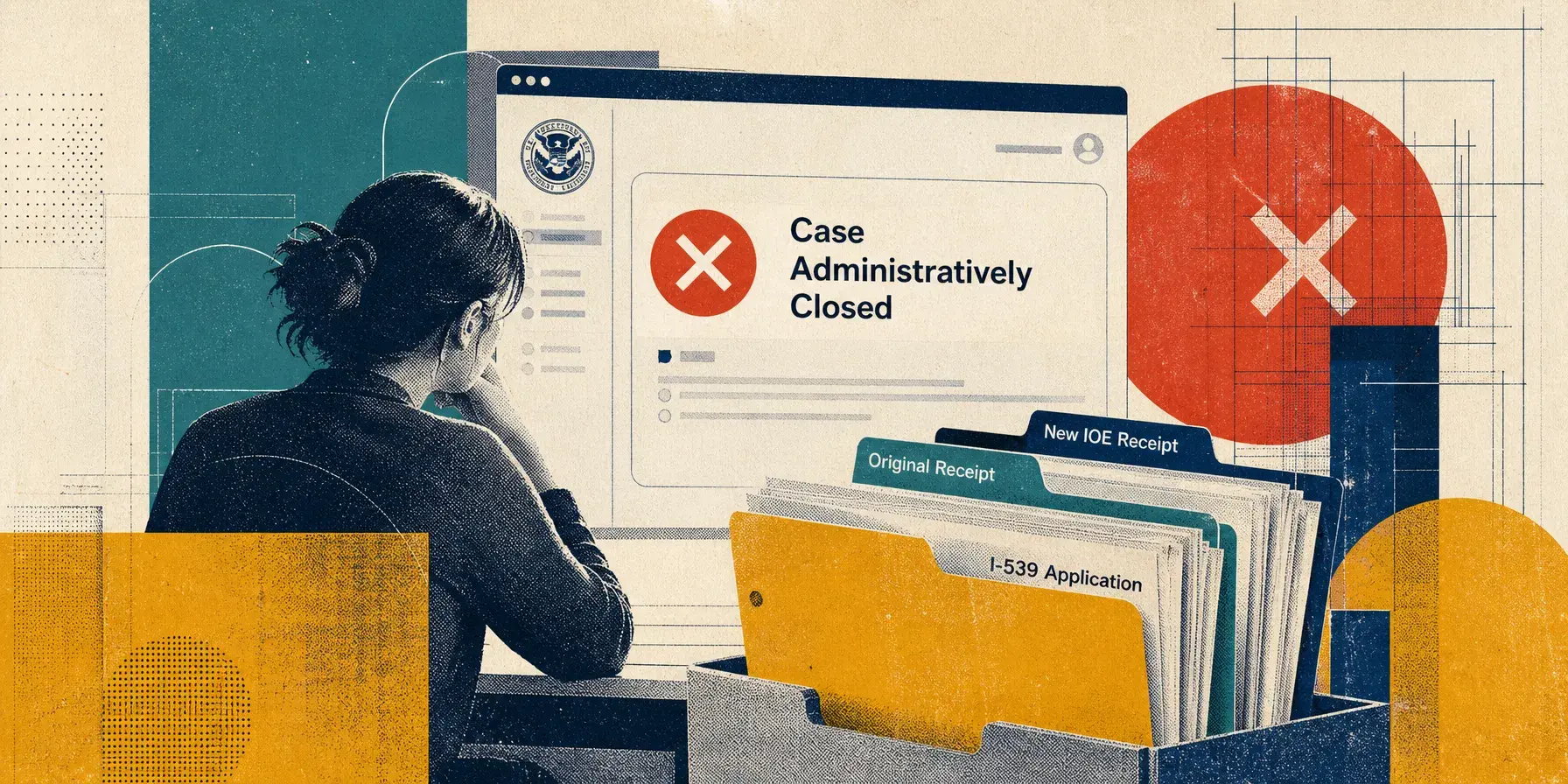
Some Form I-539 Cases Show ‘Administratively Closed’ After Migration
U.S. New International Student Enrollment Falls 17.7% in 2025–26

Federal Judge Blocks ICE’s New Restrictions on F-1 CPT