H-1B Visa Comprehensive Guide
H-1B rules changed significantly in 2025–2026, and several changes are still in court or under rulemaking. We update this guide when official rules or court orders change. Always confirm your situation with your employer’s immigration attorney or your school’s Designated School Official (DSO).
1. What is Day 1 CPT?
2. Is Day 1 CPT legal?
3. Why is CPT Important to International Students?
4. Who Will Benefit from Day 1 CPT?
5. Day 1 CPT Criteria and Requirements
6. The Risks of Using Day 1 CPT
7. How to Choose Day 1 CPT Universities
8. How to Choose Day 1 CPT Programs Day 1 CPT Application Process
9. Other Day 1 CPT FAQ
What is H-1B Visa?
H-1B Process
H-4 Dependents and H-4 EAD
H-1B Cap and Cap-Exempt Employers
Processing Times
Common H-1B RFEs and Denials
What Is the H-1B Visa?
The H-1B is a U.S. work visa for professionals in “specialty occupations”: jobs that require at least a bachelor’s degree, or its equivalent, in a field directly related to the work. A U.S. employer must sponsor you. You can’t apply on your own.
Most first-time H-1B workers must be selected in an annual lottery. Employers such as universities and nonprofit research organizations can file year-round outside the cap.
H-1B status is granted for up to three years at a time, generally for a maximum of six years. Extensions beyond six years are possible in certain green card situations. Unlike most temporary visas, H-1B allows “dual intent,” so you can pursue a green card while in H-1B status.
H-1B Changes in 2025–2026: Status at a Glance
| Change | What it does | Status |
|---|---|---|
| Wage-weighted lottery | More lottery entries for higher wage levels: Level IV gets 4 entries, Level I gets 1 | In effect since February 27, 2026 |
| $100,000 proclamation payment | Applies to certain petitions for individuals outside the United States who need H-1B visas to enter | Blocked. Extended through September 21, 2027, but a court ruling still blocks it. A second court barred collection under both the original and the extended proclamation. Appeals continue. |
| Proposed $103,265 fee | Would apply to every cap-subject petition, including master’s cap cases, on top of existing fees | Proposed only. No final rule as of Oct. 30, 2026; no fee is owed |
| Layoff executive order (EO 14431) | Agencies must consider an employer’s layoffs in the past year, or planned layoffs, affecting similarly situated U.S. workers | In effect (signed Sept. 18, 2026) |
| End of the 60-day grace period | Workers would be out of status the day after employment ends | Proposed only. The current grace period still applies. |
| Higher prevailing wages | Level I would rise from the 17th to the 34th percentile, with higher thresholds at every level | Proposed. Current wage levels apply until a final rule takes effect. |
| Social media review at consulates | Online presence review for all H-1B and H-4 visa applicants | In effect since Dec. 15, 2025 |
Who Qualifies for H-1B?
To qualify, three things must be true.
- The job must be a specialty occupation. It must require a U.S. bachelor’s degree or higher, or its equivalent, in a specific field. Under the 2025 modernization rule, the required degree must be “directly related,” meaning there is a logical connection between the degree and the job duties.
- You must hold the required degree or its equivalent. Foreign degrees, and some combinations of education and work experience, can qualify with a credential evaluation.
- A U.S. employer must sponsor you. The employer files a Labor Condition Application (LCA) with the Department of Labor, promising to pay at least the required wage, and then files Form I-129 with USCIS. Entrepreneurs can also obtain H-1B status through petitions filed by their own start-ups, subject to additional conditions.
The H-1B Cap and Cap-Exempt Employers
Each year, there are 65,000 regular cap numbers plus 20,000 for the advanced degree exemption, which is reserved for people with a U.S. master’s degree or higher.
Cap-exempt employers don’t go through the lottery and can file at any time of year. They include universities, their affiliated nonprofits, and nonprofit or governmental research organizations. The proposed $103,265 fee would not cover petitions from cap-exempt employers such as universities and certain nonprofit and governmental research organizations.
If you have already been counted against the cap, you generally don’t need to enter the lottery again when you change employers.
How the H-1B Lottery Works Now
Short answer: Your employer registers you online each March. Since FY 2027, selection is no longer purely random. Higher offered salaries get more chances.
| Wage level the offered salary meets | Entries in the pool |
|---|---|
| Level IV | 4 |
| Level III | 3 |
| Level II | 2 |
| Level I | 1 |
The offered salary is compared against Department of Labor wage levels for the job’s occupation and work location. The weighting is based solely on the salary offered, not the prevailing wage.
Both the regular round and the master’s cap round use the weighted method, so a U.S. master’s degree still gives you two chances at selection. Selection remains random within the weighted pool. No wage level guarantees selection.
Your registration, LCA, and petition must match. The final rule requires consistency between the registration, the Labor Condition Application, and the H-1B petition.
What happened in FY 2027
- 211,600 registrations were properly submitted, down about 38% from 343,981 the year before.
- 71.5% of selected beneficiaries held U.S. advanced degrees, up from 57%.
- USCIS reached the cap and ran no second lottery.
Typical yearly timeline
| When | What happens |
|---|---|
| March | Registration window (at least 14 days); $215 fee per registration |
| By March 31 | Selection notices posted in employers’ USCIS online accounts |
| April 1 – June 30 | Selected employers file full petitions |
| October 1 | Earliest H-1B start date |
The FY 2028 registration period is expected in Spring 2027. USCIS will announce the exact dates.
See also: how to prepare for the H-1B lottery.
The H-1B Process Step by Step
- Job offer and wage planning. The employer defines the role, occupation code, worksite, and salary. Under weighted selection, these choices affect your lottery odds.
- Electronic registration (cap cases only). The employer registers you and pays $215.
- Selection. If selected, the employer must file within the window shown on the selection notice.
- Labor Condition Application. The employer files the LCA with the Department of Labor.
- Form I-129 petition. The employer files with USCIS, requesting either a change of status (if you’re in the U.S.) or consular processing (if you’re abroad).
- Decision. USCIS approves the petition, issues a Request for Evidence (RFE), or denies it.
- Visa stamp or change of status. If you’re abroad, you apply for a visa at a U.S. consulate. Applicants are instructed to set all social media profiles to public. If your change of status is approved in the U.S., H-1B begins on the approved start date.
- Start work. For cap cases, this is no earlier than October 1.
From F-1 or OPT to H-1B
For most international students, the path looks like this: graduate, work on OPT or STEM OPT, get registered in the lottery by an employer, and change status to H-1B inside the U.S.
Cap-gap protection. If your employer files a timely change-of-status petition while your OPT is valid, your F-1 status and OPT are automatically extended until April 1 of the relevant fiscal year, or until the approved petition’s validity start date. This protects you if your OPT would otherwise end before October 1. Ask your DSO for an updated I-20 showing the extension.
If you weren’t selected and your OPT is ending, some students continue graduate study, including programs with curricular practical training (CPT), so they remain in status and can be registered again the following year. Keep three things in mind:
- CPT is never automatic. Your DSO must authorize it in SEVIS before you work, and the training must be part of your curriculum. CPT policies were disrupted in fall 2026. On November 17, 2026, a federal judge paused SEVP’s August 2026 guidance, which had said internships qualify as CPT only if required of every student in a program, but each school still sets its own policy. Read how the November 2026 CPT ruling affects students.
- USCIS may review your F-1 history when you later file for H-1B. Choose an accredited school, follow its attendance rules, and keep records of your enrollment, attendance, and CPT authorizations.
- Your degree path matters. A study plan that progresses logically and relates to your career is easier to explain than repeated degrees at the same level.
See also: our OPT and STEM OPT guide and the Day 1 CPT FAQ.
H-1B Fees and Costs in 2026
Most H-1B fees are paid by the employer.
Attorney fees, and the visa application fee if you apply abroad, are additional. Check the current USCIS Fee Schedule (Form G-1055) before filing.
See also: how the $215 registration fee came about.
Processing Times and Premium Processing
Regular processing times vary by service center and change often, so check the USCIS processing times tool for current estimates.
With premium processing, the I-129 timeframe is 15 business days for USCIS to take action. That action may be an approval, an RFE, or a denial. Premium processing speeds up the decision; it does not improve your chances of approval.
Living and Working on H-1B
- Duration and extensions. H-1B is approved in periods of up to three years, generally with a six-year maximum. Time beyond six years may be available if you’re at certain stages of the green card process.
- Changing employers (H-1B transfer). Once you’ve been counted against the cap, a new employer can file a petition for you without a new lottery. In many cases, you can start the new job once the new petition is properly filed, provided you’re maintaining status.
- Job changes with the same employer. A significant change, such as moving to a worksite outside the area covered by your LCA, may require an amended petition.
- Employer layoffs. Under EO 14431, an employer’s workforce reductions may be scrutinized in petitions (including extensions), at visa stamping, and at entry.
- Travel. You need a valid H-1B visa stamp to re-enter the U.S. after international travel. Expect an online presence review at the consulate.
H-4 Dependents and H-4 EAD
Your spouse and unmarried children under 21 can hold H-4 status. Certain H-4 spouses can apply for work authorization (an H-4 EAD) once the H-1B worker reaches specific green card milestones.
The H-4 EAD program remains in place. DHS has listed H-4 EAD rescission as a long-term regulatory agenda item but has not published a proposed regulation.
H-4 dependents who want to study full-time sometimes consider changing from H-4 to F-1.
Laid Off on H-1B: Your Options
Short answer: You currently have up to 60 days to find a new sponsor, change to another status, or leave the U.S. Act early, because a pending rule could remove this cushion.
How the 60-day grace period works
- It lasts up to 60 consecutive calendar days, or until the end of your authorized validity period, whichever is shorter.
- It starts the day after employment ends, which is typically the last day for which a salary or wage is paid.
- You may not work during the grace period.
- It is discretionary, which means DHS can shorten it in an individual case.
Proposed change
On September 11, 2026, DHS published a proposed rule titled “Eliminating the Discretionary 60-Day Grace Period.” If it is finalized as written, H-1B workers and their families would be considered out of status the day after employment ends. The current grace period still applies until a final rule takes effect.
Options within the grace period
| Option | What to know |
|---|---|
| New H-1B employer | The new employer files a petition for you before your grace period ends. |
| Dependent status (H-4, L-2) | Possible if your spouse holds a qualifying status. |
| F-1 student status | Requires admission to an SEVP-certified school, plus either a change-of-status application or re-entry on an F-1 visa. You may work only with authorized CPT or OPT. See H-1B to F-1. |
| B-1/B-2 visitor status | Higher risk in 2026. USCIS archived its guidance supporting this approach as of March 31, 2026, and RFEs have increasingly treated job searching and interviewing as inconsistent with visitor status. |
| Another work category (for example, O-1) | Requires a sponsor and separate eligibility. |
| Leave the U.S. | Departing within the grace period protects your immigration record. |
Filing on time protects your stay while a case is pending. If you file a non-frivolous change-of-status application before the grace period ends, you won’t accrue unlawful presence while it remains pending, even after the 60 days. However, if the application is denied after the grace period has expired, you may be treated as having fallen out of status.
Read more: what to do after an H-1B layoff and Day 1 CPT after a layoff.
Not Selected in the H-1B Lottery?
- Try again next year. Under weighted selection, a higher offered wage improves your odds.
- Look for cap-exempt employers, such as universities, affiliated nonprofits, and research organizations.
- Consider other visa categories:
- O-1, for people with extraordinary ability;
- L-1, after a year working abroad for a multinational employer;
- E-3, H-1B1, or TN, if your nationality qualifies.
- Continue your studies. This keeps you in F-1 status and may allow CPT or OPT if your program and DSO authorize it.
- Work abroad for an employer that may transfer you later.
Read work visa alternatives and Day 1 CPT risks.
Common H-1B RFEs and Denials
USCIS commonly questions:
- whether the job is truly a specialty occupation with a directly related degree requirement;
- whether your degree or equivalency matches the role;
- whether the wage level, job duties, and worksite are consistent across the registration, LCA, and petition;
- whether the employer has a genuine job and the ability to employ you;
- whether you maintained your prior status, including past CPT or OPT compliance.
The best protection is a well-documented petition and complete records of your F-1 history. See Day 1 CPT and RFEs.
From H-1B to Green Card
Most H-1B workers pursue an employment-based green card in three stages: PERM labor certification, then Form I-140, then adjustment of status or consular processing. Because H-1B allows dual intent, starting this process does not violate your status.
An approved I-140 can matter for extending H-1B beyond six years and for H-4 EAD eligibility. Wait times depend heavily on your country of birth and category. The Department of Labor’s proposed prevailing wage rule would also raise PERM wage requirements if it is finalized.
Explore our green card guides.
No. Courts have blocked collection, even though the proclamation was extended to September 2027. Appeals are ongoing, so check for updates before filing.
It targets workers outside the U.S. who need an H-1B visa to enter. Students changing status inside the U.S. generally fall outside it, but confirm with your employer’s attorney.
Partly. Since FY 2027, higher wage levels get more entries, but selection within the pool is still random.
Yes. Master’s cap registrations are entered in both selection rounds, and 71.5% of FY 2027 selections held U.S. advanced degrees.
No. You can look for jobs, and a new employer can file for you, but you can’t work until you’re authorized again.
It has been proposed but not finalized. It still applies today.
Possibly. EO 14431 directs agencies to consider an employer’s recent or planned layoffs, but it is not an automatic denial.
Lorem ipsum dolor sit amet, consectetuer adipiscing elit. Aenean commodo ligula eget dolor. Aenean massa. Cum sociis natoque penatibus et magnis dis parturient montes, nascetur ridiculus mus. Donec quam felis, ultricies nec, pellentesque eu, pretium quis, sem. Nulla consequat massa quis enim. Donec pede justo, fringilla vel, aliquet nec, vulputate eget, arcu. In enim justo, rhoncus ut, imperdiet a, venenatis vitae, justo. Nullam dictum felis eu pede mollis pretium. Integer tincidunt. Cras dapibus. Vivamus elementum semper nisi.
Yes. The State Department instructs H-1B and H-4 applicants to set their profiles to public for its online presence review.
Browse schools by region
Compare schools by what matters to you
Explore More H-1B & Status Guides
H-1B
- Got Laid Off on H-1B? What to Do Next
- Overcoming H-1B Layoffs
- How to Prepare for the H-1B Lottery
- H-1B Specialty Occupation Criteria
- Latest H-1B News
Change of status
Study and work options
Have Questions? Contact us now!
News - Day 1 CPT & Day 1 CPT Universities
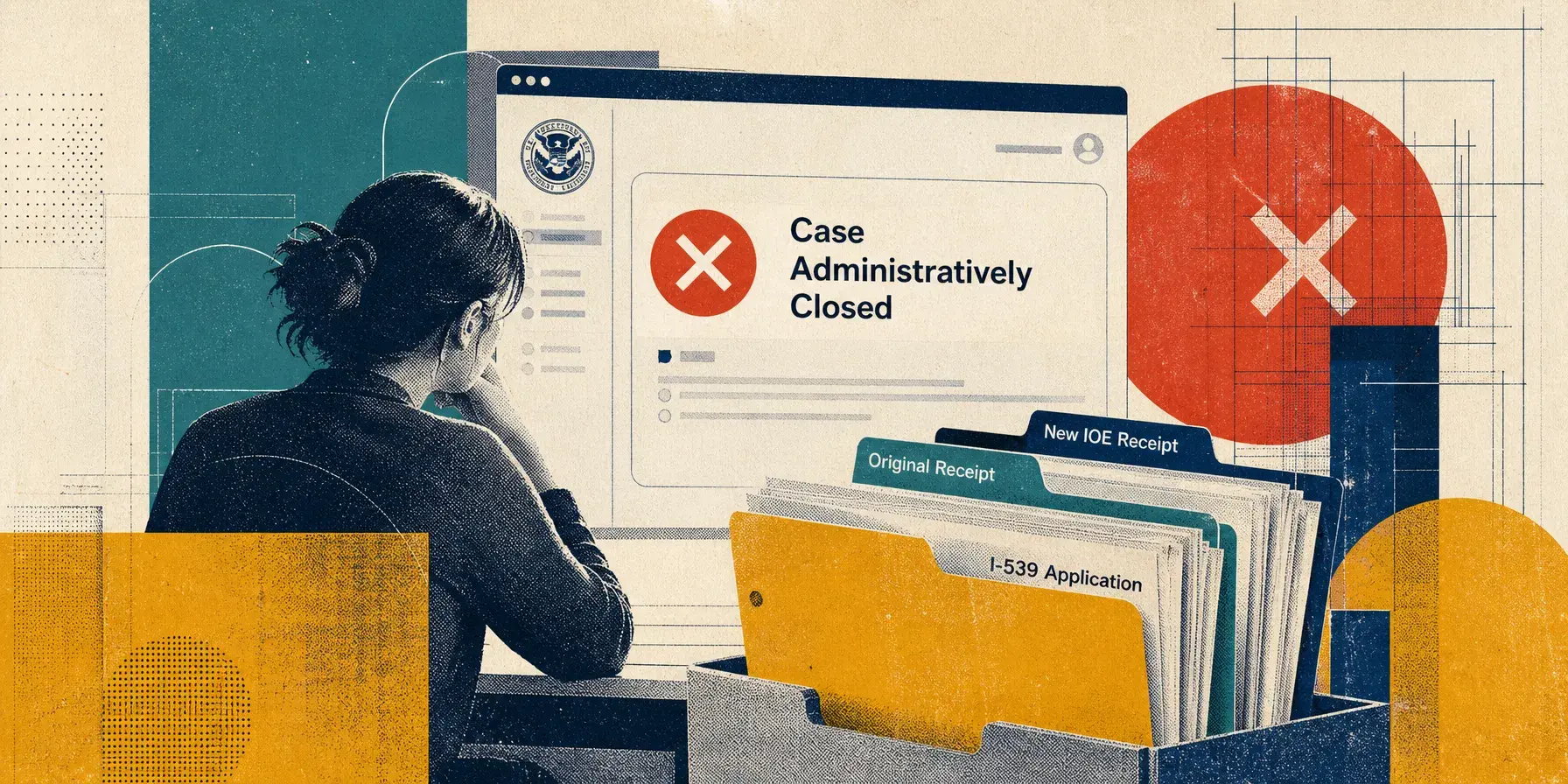
Some Form I-539 Cases Show ‘Administratively Closed’ After Migration
U.S. New International Student Enrollment Falls 17.7% in 2025–26

Federal Judge Blocks ICE’s New Restrictions on F-1 CPT