Harrisburg University of Science and Technology

📍 Locations: Pennsylvania

🔖 Day 1 CPT Programs: MS Analytics (STEM); MSCIS (STEM); MSISEM (STEM); MS Biotechnology; MS Consumer Behavior and Decision Sciences; MS Cybersecurity Operations and Control Management; MS Healthcare Informatics; MS Human-Centered Interaction Design; MS Learning Technologies & Media Systems; MS Pharmaceutical Sciences; MS Project Management; MS Techpreneurship

🎖 Accreditation: MSCHEi

🎱 Type: Private Non-Profit

💰 Program Tuition: from $34,400

⏱️ Program Duration: 24 months

🚖 On-Site Visit: Bi-Monthly

Harrisburg University of Science and Technology Day 1 CPT

University Overview

Harrisburg University was established in 2001 and is located in Harrisburg, Pennsylvania. As a young school, it put its focus on recruiting the right people. Harrisburg University is popular among international students because of the quality of its faculties. Many of those who teach at Harrisburg University also work as executives in the correspondent industries, which gives them an edge in bringing the most updated industrial knowledge to the classroom as well as an extensive network for their students.

Harrisburg University now has a total of 200 full-time faculty members. It currently hosts 6,469 undergraduate and graduate students with over 70% of them being international students from 110 different countries. 92% of the students found a job within 6 months after graduation.

Harrisburg University of Science and Technology's Accreditation

  • Harrisburg University was accredited by the Middle States Commission on Higher Education(MSCHE) on June 22, 2009.
  • Harrisburg University was named the #1 STEM university in the U.S. by Corporate LiveWire
  • According to Higher Education Review, Harrisburg University is the 2nd most popular college for Indian students in the U.S.
  • Harrisburg University's Project Management program was ranked in the top 25 in the country by AfforabableCollege.com
1-May-10-2024-07-42-50-1183-AM
affordablecolleges-2
awards-page-logo
download-2

Locations

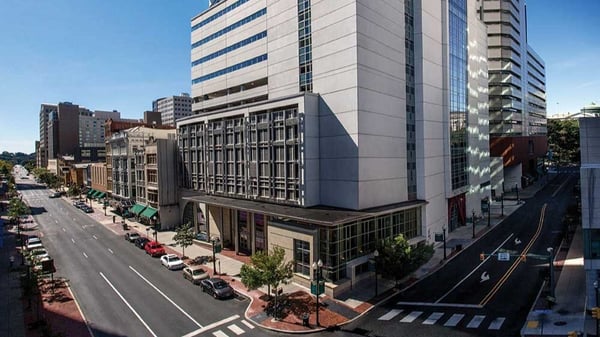
Harrisburg University’s Academic Center is located at 326 Market Street. There are entrances along Market Street and an entrance along Fourth Street. The Admissions Office is located on the ground floor in the Academic Center.

You can see which ways are most reasonable for you if you need to travel to Harrisburg.

  • By air: Harrisburg International Airport (MDT) is 9 miles from HU.
  • By car: 3 hours from New York, Washington DC, and Baltimore; 2 hours from Philadelphia.
  • By train or bus: The Amtrak and Greyhound stations are 1 block from campus.
  • Harrisburg: 326 Market St, Harrisburg, PA 17101

CPT Policies at Harrisburg University of Science and Technology

For I-20 transfer students, CPT-authorized internships can begin on the first day of classes, ensuring a seamless, year-round transition with no restrictions based on start dates.

There are 3 semesters in a year for Day 1 CPT Programs at Harrisburg University: Fall, Spring, and Summer.

In each semester, international students must register for at least 2 courses (6 credits; including one online course and one hybrid course)

F-1 visa students are required to start CPT internship on the first day of the first semester (Day-1 CPT full-time job).

  • Students who have not received a master's degree before being admitted to HU are recommended to work full-time for no more than 364 days (in a given calendar year) under CPT authorization. This would enable them to apply for OPT (12 months) and OPT Extension (24 months) after graduation; otherwise, such students cannot apply for OPT Extension from their master's program.
  • The CPT internship must be related to the student's area of study: One can work full-time (21-40 hours per week) or part-time (20 hours or fewer per week). 
  • Once the employer completes the CPT verification form and sends the offer letter to the International Student Office, the school will send students the I-20 with employer information after the offer letter has been approved.
  • If a student registers for courses for the next semester in advance, the CPT authorization will be extended to the beginning of the next semester. It will cover the gap between two semesters and allow the students to work full-time legally.

CPT Details

CPT authorization needs to be renewed every year.

CPT is for graduation.

  • CPT is an integral part of the programs, and participation is required. CPT is authorized for the duration of the 2-year program with no gaps or breaks.
  • However, the university offers flexibility based on each student’s employment situation, and holding a job is not strictly mandatory. 

Harrisburg University of Science and Technology requires international student attend onsite residency class bi-monthly.

Onsite sessions are scheduled for Saturdays: from 8 AM to 12 PM in the morning, or from 1 PM to 5 PM in the afternoon.

*Harrisburg has a very straight on-site requirement. 100% attendance is required to be qualified for CPT application.
Tuition

Tuition Fee

$34,400

Program

Tuition Per Credit

Annual Tuition

Total Tuition

Master's

$955

$17,190

$34,380


Other Fees

  • Application Fee: Contact Us to waive
  • Recurrent Fees (Per Term): $500 (Program Fee)

Payment Plan

❌ Not Available

Academic Calendar

Terms Application Deadline Semester Start Date CPT Start Date
Fall 202508/09/2025
08/23/202508/23/2025
Late Fall 202510/18/2025
11/01/202511/01/2025
Spring 202612/27/2025
01/10/202601/10/2026
Late Spring 202602/28/2026
03/14/202603/14/2026
Summer 202604/25/2026
05/09/202605/09/2026
Late Summer 202606/27/2026
07/11/202607/11/2026

  • Initial F1 Students: 3 months before the first day of the term. If you missed the deadline, please get in touch with us.
  • If you missed the deadline, please contact us. We are the official recruitment partner of Harrisburg University of Science and Technology; we can help you accelerate your application.

Day 1 CPT Programs at Harrisburg University of Science and Technology

MS Computer Information Sciences

The 36-semester hour Master of Science degree in Computer Information Sciences provides a challenging opportunity to pursue a versatile course of study reflecting the student’s desire, background, and future responsibilities.


Core Courses
  • CISC 520 - Data Engineering and Mining (3 semester hours
  • CISC 525 - Big Data Architectures (3 semester hours)
  • CISC 530 - Computing Systems Architecture (3 semester hours)
  • CISC 603 - Theory of Computation (3 semester hours)
  • CISC 610 - Data Structures and Algorithms (3 semester hours)
Experiential courses
  • GRAD 695 - Research Methodology and Writing (3 semester hours)
  • CISC 699 - Applied Project in Computer Information Sciences (3 semester hours) or GRAD 699 - Graduate Thesis (3 semester hours)

In order to graduate with a concentration, students must take five (5) courses, totaling 15 credit hours in the area of their chosen concentration

  • Scientific Computing (15 semester hours)
  • Software Engineering and Software Testing (15 semester hours)
  • Cyber Security (15 semester hours)
MS Analytics

This 36-semester hour program prepares the student by providing depth in analytics during the first year and focused functional study during the second year that can be applied to any discipline or any interdisciplinary area.


Core Courses
  • ANLY 500 - Analytics I: Principles and Applications (3 semester hours)
  • ANLY 502 - Analytical Methods I (3 semester hours)
  • ANLY 510 - Analytics II: Principles and Applications (3 semester hours)
  • ANLY 506 - Exploratory Data Analysis (3 semester hours) or ANLY 512 - Data Visualization (3 semester hours)
  • NLY 545 - Analytical Methods II (3 semester hours) or ANLY 560 - Functional Programming Methods for Analytics (3 semester hours)
Experiential courses
  • GRAD 695 - Research Methodology and Writing (3 semester hours)
  • ANLY 699 - Applied Project in Analytics (3 semester hours) or GRAD 699 - Graduate Thesis (3 semester hours)
MS Biotechnology

The 36-semester hour Master of Science degree in Biotechnology provides a comprehensive work-oriented curriculum that explores the industrial, medical, and regulatory underpinnings of the biotechnology field. The program offers a sound foundation in these multiple areas of biotechnology while integrating the applied and innovative aspects of science. With a focus on industry-relevant projects, case studies, and real-world scenarios, the program graduates are prepared with the skills and technical expertise to confidently cater to the needs of an ever-growing biotechnology sector.


Core courses
  • BTEC 502 - Biomaterials
  • BTEC 508 - Omics for Life Sciences
  • BTEC 522 - Graduate Biotechnology Seminar
  • BTEC 540 - Biostatistics
  • BTEC 550 - Instrumentation in Biotechnology Industry
  • BTEC 560 - Design of Experiment
Experiential courses
  • GRAD 695 - Research Methodology and Writing
  • BTEC 699 - Applied Project in Biotechnology
  • or GRAD 699 - Graduate Thesis

Concentrations

Four concentrations are offered:

  • Individualized Concentration (12 semester hours)
  • Biotechnology Business and Management (12 semester hours)
  • Biomanufacturing (12 semester hours)
  • Medical Biotechnology (12 semester hours)

*Student can choose a course from any of the Master of Science programs

Individualized Concentration

The Master of Science in Biotechnology student can choose electives totaling up to 12 credits from Biotechnology, Information Systems Engineering and Management, Project Management, and Healthcare Informatics programs at Harrisburg University: This option allows the Biotechnology student to build their own customized specialization and concentration.

Biotechnology Business and Management Concentration
  • BTEC 612 - Regulatory Affairs in Life Science Industries
  • BTEC 622 - Principles of Accounting and Finance
  • BTEC 634 - Healthcare Economics: Fundamentals for Providers and Biotech Professionals
  • BTEC 672 - Legal Affairs and Policies for Life Science Industry
  • BTEC 675 - Innovation and Improvisation in Research and Development
  • MGMT 510 - Business Strategy and Management Principles
  • Elective*
Biomanufacturing Concentration
  • BTEC 618 - Principles of Bioprocessing
  • BTEC 650 - Fermentation Technologies
  • BTEC 655 - Industrial Enzymes and Proteins
  • BTEC 675 - Innovation and Improvisation in Research and Development
  • BTEC 698 - Biotechnology Graduate Internship
  • Elective*
Medical Biotechnology Concentration
  • BTEC 610 - Advanced Topics in Drug Discovery and Delivery
  • BTEC 615 - Biomedical Devices and Prototyping
  • BTEC 620 - Emerging Trends in Diagnostics
  • BTEC 625 - Pharmacogenomics
  • BTEC 630 - Cancer Biotechnology
  • BTEC 635 - Clinical Pharmacology
  • BTEC 640 - Trends in Regenerative Medicine
  • BTEC 698 - Biotechnology Graduate Internship
  • Elective*
MS Consumer Behavior and Decision Sciences

Earn a 36-semester-hour Master of Science in Consumer Behavior and Decision Sciences—an applied behavioral research program designed to meet growing industry and public sector demand for actionable insights into human behavior. This graduate degree equips students with in-demand skills for careers in applied behavioral research, including Consumer Insights Manager, Market Research Analyst, Marketing Manager, Sensory Scientist, and Behavioral Scientist.

Students learn how to measure and interpret consumer preferences (broadly defined) using both traditional and emerging research methods, then translate findings into data-driven, real-world strategies. Graduates will be prepared to combine quantitative and qualitative decision-making to guide marketing, product development, customer experience, and policy initiatives.


Core Courses
  • ANLY 512 - Data Visualization
  • ANLY 518 - Statistical Methods for Behavioral Researchers 
  • CBDS 520 - Judgement and Decision Making
  • CBDS 535 - Quantitative Research Methods
  • CBDS 545 - Qualitative Research Methods
  • CBDS 550 - Sampling and Segmentation
  • CBDS 620 - Marketing Applications
  • CBDS 680 - Special Topics in Applied Behavioral Research
Experiential Courses
  • CBDS 695 - Advanced Behavioral Research Methods
  • CBDS 699 - Applied Behavioral Research Project
Elective Courses
  • ANLY 520 - Natural Language Processing: Text Summarization and Classification
  • ANLY 530 - Principles and Applications of Machine Learning
  • HCID 510 - Theories of Human Interaction
  • HCID 520 - Users and Populations
  • PMGT 510 - Principles of Project Management 


MS Cybersecurity Operations and Control Management

The 36-semester hour Master of Science degree in Cybersecurity Operations and Control Management focuses on the architecture and engineering of computer network security. The student acquires the skills to secure network information, design computer security architecture, and data security engineering as well as obtain leadership skills, understanding of ethics, and compliance knowledge.


Core Courses
  • CYOM 503 - Principles of Computer Networking
  • CYOM 521 - Cybersecurity Architecture and Resiliency
  • CYOM 535 - Principles of Cloud Security
  • CYOM 569 - Securing Software and Application Environments
  • CYOM 599 - Leadership, Ethics, and Compliance in Cybersecurity Industry
Experiential Courses
  • GRAD 695 - Research Methodology and Writing
  • CYOM 699 - Applied Project in Cybersecurity Operations and Control Management
  • or GRAD 699 - Graduate Thesis

Concentration: Cybersecurity and cyber warfare concentration
  • CYOM 661 - Principles of Cybersecurity & Cyber Warfare
  • CYOM 662 - Ethical Hacking Development Lab
  • CYOM 663 - Cyber Risk Assessment and Management
  • CYOM 683 - Special Topics in Cybersecurity Operations and Control Management
  • CYOM 693 - Current Topics in Cybersecurity Operations and Control Management
MS Healthcare Informatics

The 36-semester hour graduate program in Healthcare Informatics provides clinicians with knowledge and experience that allows them to function as valued team members selecting, installing, adopting, employing, evaluating, and optimizing healthcare-related IT systems, such as Electronic Medical Records (EMRs), in today's healthcare delivery systems. The clinical objectives of healthcare informatics are to enhance individual and population health outcomes, improve patient care, and strengthen the clinician-patient relationship. This program emphasizes translational, communication, and interpersonal skills during the selection, implementation, and optimization of healthcare IT systems while providing a solid base in informatics practice, analytics tools, and the management, capture, analysis, and governance of healthcare data. These skills are necessary for effective change management of healthcare providers, for knowledge management in the institution, and for effective communication of key information and insights to both colleagues and senior decision-makers.

Core Courses
  • HCIN 500 - Healthcare Informatics
  • HCIN 515 - Essential Informatics Skills I
  • HCIN 520 - Essential Informatics Skills II
  • HCIN 545 - Healthcare Data
  • HCIN 550 - Introduction to Healthcare Analytics
Experiential Course
  • GRAD 695 - Research Methodology and Writing
  • HCIN 699 - Applied Project in Healthcare Informatics
  • or GRAD 699 - Graduate Thesis

Individual Concentration (15 semester hours)
  • ANLY 500 - Analytics I: Principles and Applications
  • ANLY 502 - Analytical Methods I 
  • ANLY 506 - Exploratory Data Analysis
  • ANLY 510 - Analytics II: Principles and Applications
  • ANLY 512 - Data Visualization
  • ANLY 515 - Risk Modeling and Assessment
  • ANLY 525 - Quantitative Decision-Making
  • ANLY 545 - Analytical Methods II
  • ANLY 560 - Functional Programming Methods for Analytics
  • BTEC 634 - Healthcare Economics: Fundamentals for Providers and Biotech Professionals
  • CISC 520 - Data Engineering and Mining
  • CISC 525 - Big Data Architectures
  • HCID 500 - Design Perspectives
  • HCID 504 - Methods for Design Research
  • HCID 520 - Users and Populations
  • HCID 540 - Design Tools and Processes
  • HCID 570 - Design Patterns and Contexts
  • HCIN 525 - Healthcare Case Studies Using Predictive Analysis
  • HCIN 541 - Healthcare Systems
  • ISEM 500 - Strategic Planning for Digital Transformation
  • ISEM 501 - Information and Communication Technologies (ICT) Principles
  • ISEM 525 - Business Process Modeling and Workflow Systems
  • ISEM 565 - Business Intelligence and Decision Support Systems
  • MGMT 510 - Business Strategy and Management Principles
  • MGMT 511 - Digital and Global Enterprises
  • MGMT 520 - Professional Communication
  • MGMT 560 - Organizational Leadership
  • PMGT 510 - Principles of Project Management
  • PMGT 540 - Planning and Executing Project
  • PMGT 570 - Agile Project Management with Scrum Methodology


MS Human-Centered Interaction Design

The 36-semester hour graduate program in Human-Centered Interaction Design is designed to promote the human-centered collaborative mindsets that are required for careers in the research, specifications, and development of technologically-driven experiences. The program is interdisciplinary, bringing together the application of knowledge drawn from the social and behavioral sciences, information science, software engineering, and project management. The student is taught a balance of theories, methods, skills, and processes.


Core Courses
  • HCID 500 - Design Perspectives
  • HCID 504 - Qualitative Discovery Research
  • HCID 510 - Theories of Human Interaction
  • HCID 520 - Users and Populations
  • HCID 540 - Design Tools and Processes
  • HCID 570 - Design Patterns and Contexts
Experiential Courses
  • GRAD 695 - Research Methodology and Writing
  • and GRAD 699 - Graduate Thesis
  • HCID 695 - Design Research Studio
  • and HCID 699 - Applied Project in Human-Centered Interaction Design
Concentration - Individual Concentration
MS Information Systems Engineering & Management

The 36-semester hour graduate program in Information Systems Engineering and Management (ISEM) is designed to educate the leaders who can plan, architect, integrate, and manage the systems needed to support modern digital enterprises.


Core Courses
  • ISEM 500 - Strategic Planning for Digital Transformation
  • ISEM 540 - Enterprise Architecture and Integration
  • MGMT 510 - Business Strategy and Management Principles

Choose One

  • CISC 510 - Object-Oriented Software
  • ENTP 500 - Entrepreneurship and Innovation
  • ISEM 502 - User-Centered Design
  • ISEM 503 - Artificial Intelligence Principles and Applications 
  • ISEM 530 - Systems Engineering Principles
  • ISEM 565 - Business Intelligence and Decision Support Systems
  • ISEM 574 - Bitcoin Blockchain
  • LTMS 531 - Designing Serious Games and Simulations
  • QISC 530 - Foundations of Quantum Information Science

Choose One

  • ANLY 500 - Analytics I: Principles and Applications
  • ENTP 510 - Entrepreneurship: From Traction to Scale 
  • ISEM 528 - Industry Analysis and Technology Patterns
  • MGMT 511 - Digital and Global Enterprises
  • PMGT 510 - Principles of Project Management
  • QISC 550 - Programming Quantum Computers
Experiential courses
  • GRAD 695 - Research Methodology and Writing
  • ISEM 699 - Applied Project in Information Systems Engineering and Management or GRAD 699 - Graduate Thesis
MS Learning Technologies & Media Systems

The Learning Technologies and Media Systems is a 36-semester hour program that provides the student with leading-edge approaches and skills to aid in the application of existing and emerging learning technologies in a variety of learning environments. The innovative applied learning technologies program provides the student with immediate career benefits while preparing for anticipated industry needs. 


Core courses
  • LTMS 500 - Macro Instructional Design
  • LTMS 510 - Learning Technologies and Solutions
  • LTMS 514 - Media Selection, Design and Production
  • LTMS 518 - eLearning Development
  • LTMS 525 - Learning Theories and Instructional Strategies
Experiential Courses
  • GRAD 695 - Research Methodology and Writing
  • GRAD 699 - Graduate Thesis
  • or LTMS 698 - Learning Technologies Internship 
  • or LTMS 699 - Applied Project in LTMS

Concentrations
Instructional Technology:
  • LTMS 520 - Learning Evaluation and Assessment
  • LTMS 530 - Managing Technology Resources
  • LTMS 600 - Implementing Web 2.0 in the Classroom
  • LTMS 608 - Course Management Systems
  • LTMS 615 - Coordinating the Learning Technology Infrastructure
Instructional Design:
  • LTMS 520 - Learning Evaluation and Assessment
  • LTMS 614 - Social Learning in the Organization
  • LTMS 635 - eLearning Authoring Systems
  • LTMS 636 - Micro Instructional Design
  • LTMS 609 - Synchronous Facilitation
  • LTMS 645 - Visual Representation for Learning and Communication
Instructional Development:
  • LTMS 611 - Extensible Languages for Development
  • LTMS 619 - Enterprise Applications for eLearning
  • LTMS 625 - Learning Management and Learning Content Management Systems
  • LTMS 635 - eLearning Authoring Systems
  • LTMS 680 - Advanced eLearning Development
Games and Simulations:
  • LTMS 531 - Designing Serious Games and Simulations
  • LTMS 532 - Developing Serious Games and Simulations
  • LTMS 533 - 3-D Modeling and Design
  • LTMS 534 - Development for Virtual Worlds
  • LTMS 611 - Extensible Languages for Development
Integration and Leadership:
  • LTMS 520 - Learning Evaluation and Assessment (3 semester hours)
  • LTMS 602 - Technology Evaluation and Selection (3 semester hours)
  • LTMS 530 - Managing Technology Resources (3 semester hours)
  • LTMS 612 - Integrating Learning Technologies with Human Resource Functions (3 semester hours)
  • LTMS 613 - Data Protection in Learning Solutions (3 semester hours)
  • LTMS 625 - Learning Management and Learning Content Management Systems (3 semester hours)
  • PMGT 510 - Principles of Project Management (3 semester hours)
MS Pharmaceutical Sciences

This 36-semester hour Master of Science degree program in Pharmaceutical Sciences at Harrisburg University consists of advanced training in characterizing drug action and disposition. Courses offered in this program will give the student a broad understanding of diverse topics in pharmaceutical science that range from established paradigms to emerging technology and applications. Scientific communication and professional development are stressed in the curriculum and reinforced through coursework and independent study. Graduates may seek a career in research, or industry, or continue to a doctoral program in health sciences or healthcare. Classes that focus on genomics and biopharmaceutics will give the students perspectives on aspects of personalized medicine. This diverse curriculum will prepare graduates for careers in the expanding personalized medicine and biotechnology sectors, as well as in more traditional roles in the pharmaceutical industry. The elective options allow the student to individualize their own coursework based on their career goals.


Core courses
  • BTEC 625 - Pharmacogenomics 
  • BTEC 635 - Clinical Pharmacology
  • PHAR 520 - Pharmacokinetics and Pharmacodynamics
  • PHAR 525 - Drug Transport
  • PHAR 540 - Drug Metabolism
  • PHAR 690 - Ethics and Trends in Pharmaceutical Science
Experiential courses
  • GRAD 695 - Research Methodology and Writing
  • GRAD 699 - Graduate Thesis
  • PHAR 699 - Applied Project in Pharmaceutical Sciences
Following courses
  • BTEC 508 - Omics for Life Sciences
  • BTEC 540 - Biostatistics
  • BTEC 610 - Advanced Topics in Drug Discovery and Delivery
  • BTEC 612 - Regulatory Affairs in Life Science Industries
  • BTEC 634 - Healthcare Economics: Fundamentals for Providers and Biotech Professionals
  • MATH 510 - Applied Statistical Methods
MS Project Management

This 36-credit Master's program in Project Management combines academic and practical training to prepare students for roles like project coordinator and Agile manager. Focused on timely, on-budget product delivery, the PMI-backed program offers hands-on project experience.


Program Courses
  • MGMT 520 – Professional Communication
  • MGMT 560 – Organizational Leadership
  • PMGT 510 – Principles Of Project Management
  • PMGT 515 – Business And Requirements Analysis Fundamentals
  • PMGT 530 – Risk, Procurement And Contracts
  • PMGT 540 – Planning And Executing Projects
  • PMGT 550 – Quality Management And Continuous Improvement
  • PMGT 563 – Emotional Intelligence For Project Managers
  • PMGT 570 – Agile Project Management With Scrum Methodology
  • PMGT 572 – Agile Scrum Applied Projects
  • PMGT 573 – Scaling Agile For The Enterprise
  • PMGT 574 – Lean Thinking
  • PMGT 576 – Agile Lean Transformational Leadership
  • PMGT 580 – Project Management Offices
  • PMGT 699 – Applied Project Management II
Concentrations
  • Agile Lean
  • Biotechnology
  • Human-Centered Interaction Design
  • Cybersecurity
  • Healthcare Informatics
MS Techpreneurship

This 36-semester-hour Master of Science in Techpreneurship is designed for professionals who want to start a company, build a startup, or lead innovation inside an existing organization. As companies—from R&D labs to innovation centers (including Silicon Valley)—face a growing innovation management skills gap, graduates with expertise in technology management, product innovation, and entrepreneurship are in high demand.

You don’t need a Computer Science bachelor’s degree to apply. Through hands-on coursework in Philadelphia, you’ll gain a practical understanding of the technologies behind today’s digital businesses, plus the core tools of innovation strategy and innovation management. You’ll learn how to improve idea quality, inspire teams, and build a repeatable process that moves concepts from product ideation to development and go-to-market execution.


Core courses
  • ENTP 500 - Entrepreneurship and Innovation
  • ENTP 510 - Entrepreneurship: From Traction to Scale
  • ENTP 520 - Economics of Innovation
  • ENTP 530 - Financial Sustainability
  • ISEM 500 - Strategic Planning for Digital Transformation
Experiential courses
  • GRAD 695 - Research Methodology and Writing
  • ENTP 699 - Applied Project in Techpreneurship
  • or GRAD 699 - Graduate Thesis

Concentration: Individualized Concentration

Course Review System: Commitments & Professors

If you are still feeling confused about which programs you should go and what the course loadings are like, dive into our latest Course Review system, where students recount their class experiences at CIAM's Hybrid Professional Programs! This free resource empowers you to enroll in classes, select a concentration, or pick a professor with confidence.

Application to Harrisburg University of Science and Technology

Before Enrollment

Step 1. Book a free consultation with us

Step 2. Prepare the following documents for your application:

  • Transcript - All Transcripts
  • Resume
  • Passport
  • Financial Proof
  • Recommendation Letters
  • Statement of Purpose

Having trouble with the application? Contact us.

After Enrollment - CPT Application

After receiving the acceptance letter, confirm with your advisor the SEVIS transfer time and fill out the SEVIS transfer form to transfer SEVIS from your original school to Harrisburg University of Science and Technology.

FAQ - CPT at Harrisburg University of Science and Technology

Does Harrisburg Offers Day 1 CPT?

Day 1 CPT is not a formal term. Harrisburg University has master-level programs that offer CPT options starting the 1st semester after enrollment.

Day 1 CPT Programs at Harrisburg University
  • MS Cybersecurity Operations and Control Management
  • MS Healthcare Informatics
  • MS Project Management
  • MS Analytics
  • MS Computer Information Science
  • MS Human-Centered Interaction Design
  • MS Information System Engineering & Management
  • MS Learning Technologies & Media Systems
  • Others
Why so many international students recommend Harrisburg?

Hear the answer from a real student >>> Harrisburg day 1 cpt programs review

What is I drop off? Do I need to pay the scholarship back?

The scholarship will be given in the form of a tuition deduction and evenly distributed throughout the program. If you quit before the program ends, you can’t get the rest of the scholarship, but you also don’t need to pay the previous part back.

What to do if I miss the application deadline?

Contact our expert immediately. We are the official partner of Harrisburg University and provide expedited application services. Our consultant will follow up on your case and get the optimum result. We can also advise on alternative choices.

*The deadline for F1 transfer students (F1/OPT/CPT) is 4 weeks before the first day of the term.

For other students is 3 months before the first day of the term.

CPT Application and Authorization Procedures

You need to hand in:

  • A completed Curricular Practical Training Verification Form signed by an employer; and,
  • A copy of the training or employment offer letter.

Once approved, you will receive a revised SEVIS Form I-20 which you should present to your training site supervisor (employer) upon request.

Do I need to pay extra fees for CPT or CPT courses?

No. There are no additional CPT fees and the required internship course carries no academic credit, making the process cost-effective for international students.

Back to top

🚨Disclaimer: The term "Day 1 CPT Universities" commonly refers to universities that allow students to apply for Curricular Practical Training (CPT) at the start of their first semester. However, getting CPT approval on the first day of the program is not automatic or guaranteed and depends on submitting a complete application on time. In most cases, CPT approval takes 5 to 15 business days after the university receives the required documents.

Contact out Experts now to speed up the admission process!

✓ One-on-One Free Consultation

✓ Personalized Hybrid Professional Master's Programs List

✓ Application Fee Waiver & Application Assistant

✓ Scholarship Opportunities

✓ Connecting to the Admission Officer to Get Pre-Approval

✓ Premium Process - Get an Offer and I-20 within 3 days [added-value service]

*Our consultants are committed to providing a seamless experience. Once you initiate a case with us, you will be assigned a specific consultant who will thoroughly understand your case, ensuring that there's no need for you to repeat information each time you call. We will not change your consultant unless you request it.

Cost Calculator

Transparent, No Hidden Fees

$
$
Program Cost Breakdown
Total: $0